Need help? 24/7

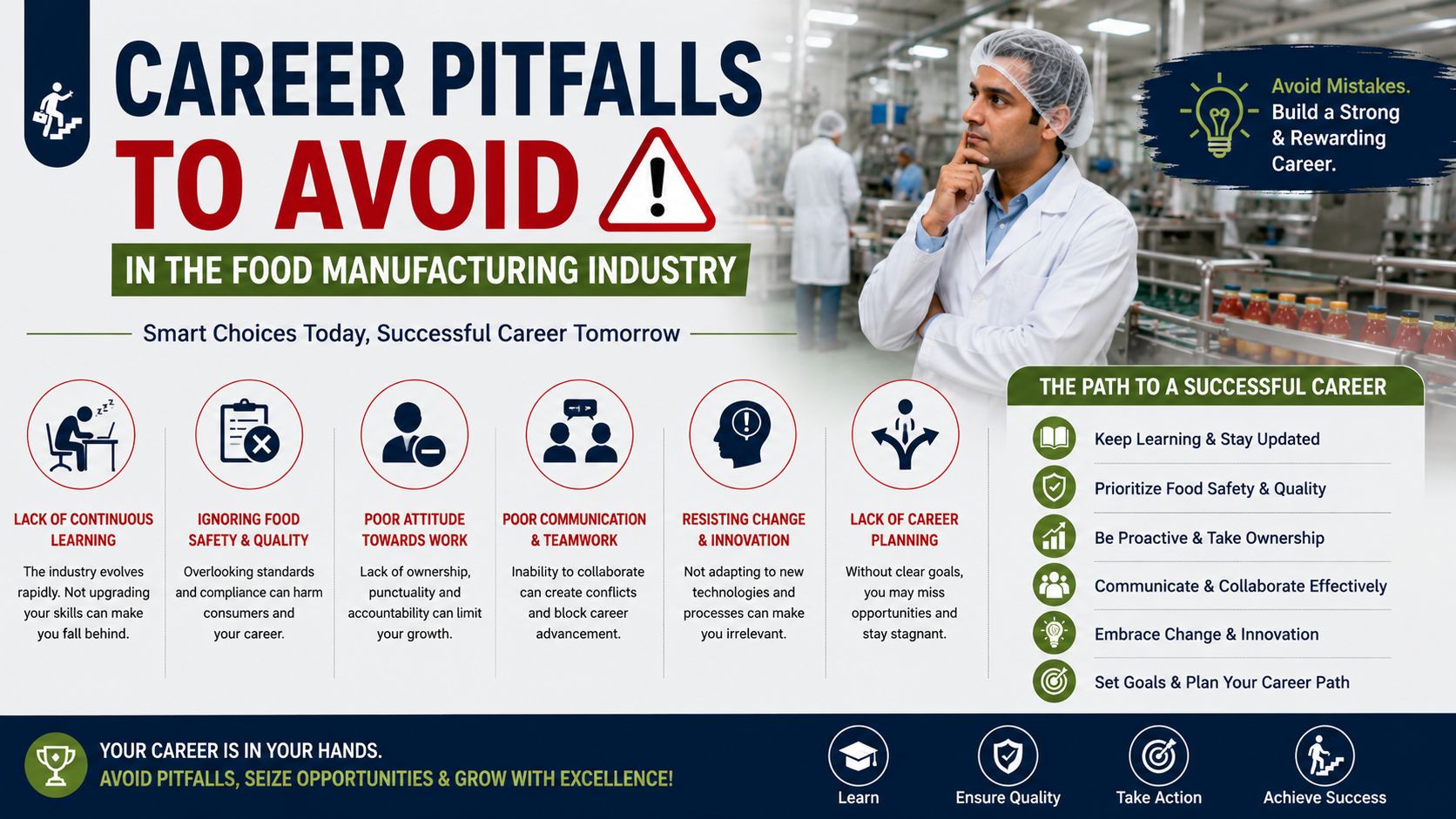
Career Pitfalls to Avoid In The Food Manufacturing Industry
For professionals in the food manufacturing industry, there are many career opportunities and successes to be had, but avoiding certain pitfalls is key to long-term success. Knowing which mistakes to avoid can help professionals navigate their careers and build a solid foundation for achieving their goals. In this article, we’ll explore common career pitfalls that should be avoided in the food manufacturing industry, so as to optimise job prospects and maximise professional satisfaction.
Stagnation and Lack of Advancement
Stagnation and lack of advancement are common career pitfalls in the food industry. Many employees find themselves stuck in their current roles with little to no opportunities for growth or development. This can lead to a feeling of frustration and complacency, which ultimately affects their productivity and motivation.
One reason for stagnation is the absence of an effective performance management system that rewards employees based on their contributions to the company. Without clear goals and expectations, it becomes difficult for employees to demonstrate their value or progress within the organisation. Another factor is outdated skill sets that do not align with changing industry trends or technological advancements. This leaves individuals ill-equipped to take on new challenges, limiting their potential for promotion or career advancement.
To avoid stagnation, it’s essential for employees to proactively seek out opportunities for growth and development. This includes taking on new projects, attending training sessions and conferences, seeking mentorship from senior colleagues, networking with peers in the industry, and staying up-to-date with emerging trends and technologies relevant to their job function. By doing so, they can position themselves as valuable assets within the organisation while also creating a path towards personal fulfilment and professional success.
Failure to Plan or Set Targets for Your Career
One of the most common career pitfalls in any industry is failing to set clear goals and targets. This is especially true in the fast-paced world of food manufacturing, where competition is fierce and opportunities for advancement are constantly shifting. Without a clear plan in place, it can be all too easy to get stuck in a dead-end job or miss out on key opportunities for growth and development.
To avoid this pitfall, it’s crucial to take the time to assess your skills, interests, and long-term career aspirations. This might involve seeking out mentorship or guidance from more experienced colleagues or investing in professional development courses or training programs. By setting concrete goals and objectives for your career path, you’ll be better equipped to chart a course towards success and avoid getting side-tracked by distractions or setbacks along the way.
Ultimately, failure to plan or set targets for your career can lead to stagnation, frustration, and missed opportunities for advancement. Whether you’re just starting out in the food manufacturing industry or looking to take your existing career to the next level, it’s important to stay focused on your long-term goals while remaining adaptable and open-minded as new challenges arise. With careful planning and strategic thinking, anyone can build a successful career in this exciting field!
Switching Jobs Too Often… Or Not Often Enough
Switching jobs too often or not often enough can both be career pitfalls to avoid in the food manufacturing industry. Job hopping, or continuously changing jobs every few months to a year, can signal to potential employers that you lack commitment and may not be worth investing in as an employee. However, staying in one position for too long without seeking opportunities for growth and advancement can also hinder your career progress.
Switching jobs too frequently could indicate that you are restless and unable to settle into a role or work environment. This might raise concerns with potential employers about your ability to commit and stick around long enough to make an impact on the company. Conversely, being complacent in your job can lead to stagnation and a lack of professional development.
It is important for professionals in the food manufacturing industry to strike a balance between job stability and career growth by seeking out new challenges within their organisations while still maintaining a level of dedication and commitment that will demonstrate their value as employees.
Settling in a Negative Work Environment
Settling in a negative work environment can be detrimental to one’s mental and emotional health. In the food manufacturing industry, it is common for employees to experience high levels of stress due to the fast-paced nature of the business. However, if a negative work environment is present, it can exacerbate these feelings of stress and anxiety.
It is important to recognise the signs that you are in a negative work environment. These may include constant criticism, lack of support from management, and an overwhelming sense of negativity amongst colleagues. If you find yourself in this situation, it is crucial to take action. This may involve speaking with human resources or seeking advice from friends or family outside of work.
Ultimately, settling in a negative work environment will only lead to burnout and dissatisfaction with your job. By taking steps to address the issue head-on, you can improve your overall well-being and potentially even improve the culture within your workplace for yourself and others around you.
Stepping Over the Tripwires: 4 Career Pitfalls to Avoid in Food Manufacturing
The food manufacturing sector is a massive, high-stakes machine. When you are managing high-speed processing lines, shifting regulatory standards, and complex supply chains, a career in this industry can be incredibly rewarding. However, because the environment is so specialized, it is equally easy to fall into subtle professional traps that can stall your upward momentum.
If you want to transition from simply managing daily shifts to driving long-term operational strategy, keep an eye out for these five critical career pitfalls.
1. The "Compliance as a Chore" Mindset
In food manufacturing, safety isn't a department—it’s the foundation of the entire business. One of the fastest ways to cap your career growth is treating compliance frameworks (like HACCP, SQF, BRCGS, or FSSC 22000) as mere administrative paperwork to deal with before an audit.
The Pitfall: Viewing quality management and Good Manufacturing Practices (GMP) as roadblocks to production speed.
The Career Impact: Leadership teams notice who prioritizes speed over safety. A single major contamination or recall can cost millions and ruin a brand's reputation; professionals who cut corners are viewed as liabilities, not leaders.
2. Resisting Automation and Floor Technology
The days of manual logging and purely mechanical production lines are rapidly drawing to a close. With the rise of advanced sorting AI, automated case packing, and integrated Internet of Things (IoT) sensors, tech fluency is mandatory.
The Pitfall: Sticking comfortably to manual logs, traditional machinery, and legacy workflows because "that's how we've always done it."
The Career Impact: As plants upgrade to smart manufacturing systems, professionals who refuse to learn human-machine interfaces (HMIs) or predictive maintenance tracking become obsolete alongside the old equipment.
3. Operating in a "Silo" (The Communication Breakdown)
A food manufacturing facility relies on a delicate balance between Production, Quality Assurance (QA/QC), and Maintenance. A major pitfall is developing a siloed mentality, where you only care about your immediate department's metrics.
The Reality: Production wants speed. QA wants perfection. Maintenance wants downtime to fix machines.
If you are in production and treat QA like the "food police," or if you are in QA and fail to understand the commercial pressure of production targets, your career growth will stall. True leadership in this industry belongs to those who can bridge the gap, collaborate cross-functionally, and communicate effectively during a high-pressure crisis.
4. Letting Production Pressure Compromise Consistency
When an order for a massive retail client is due and a critical machine breakdown puts you behind schedule, the pressure to deliver can be overwhelming.
The Pitfall: Letting critical parameters slip—like rushed sanitation cycles or skipped weight checks—just to meet a shipping deadline.
The Career Impact: Yield numbers might look great for a week, but the moment product consistency drops or a safety metric fails in the market, the fallout falls squarely on the team that signed off on it. Protecting consistency under pressure is what separates true industry executives from temporary shift managers.
The Takeaway
Navigating a career in food manufacturing requires balancing the immediate, physical realities of the plant floor with a forward-looking strategy. By actively avoiding these pitfalls—embracing technology, respecting quality parameters, and mastering cross-functional communication—you position yourself as an indispensable asset capable of running the safe, efficient plants of tomorrow.
In Summary
In conclusion, it is important for individuals in the food manufacturing industry to be aware of common career pitfalls and avoid them as much as possible. This can help ensure a successful and fulfilling career in this field. One major pitfall to avoid is becoming too comfortable in your current position and failing to continuously learn and grow professionally. It is essential to stay up-to-date with industry trends, advancements, and regulations.
Another pitfall to steer clear from is neglecting workplace relationships. Building positive relationships with co-workers, supervisors, and other industry professionals can lead to opportunities for advancement, mentorship, networking, and overall job satisfaction. It’s crucial not only to work hard but also develop emotional intelligence skills that help you interact effectively with different personalities.
Avoiding these pitfalls requires self-awareness, discipline and willingness on the part of individuals working within the food manufacturing sector or any other profession out there!