Need help? 24/7

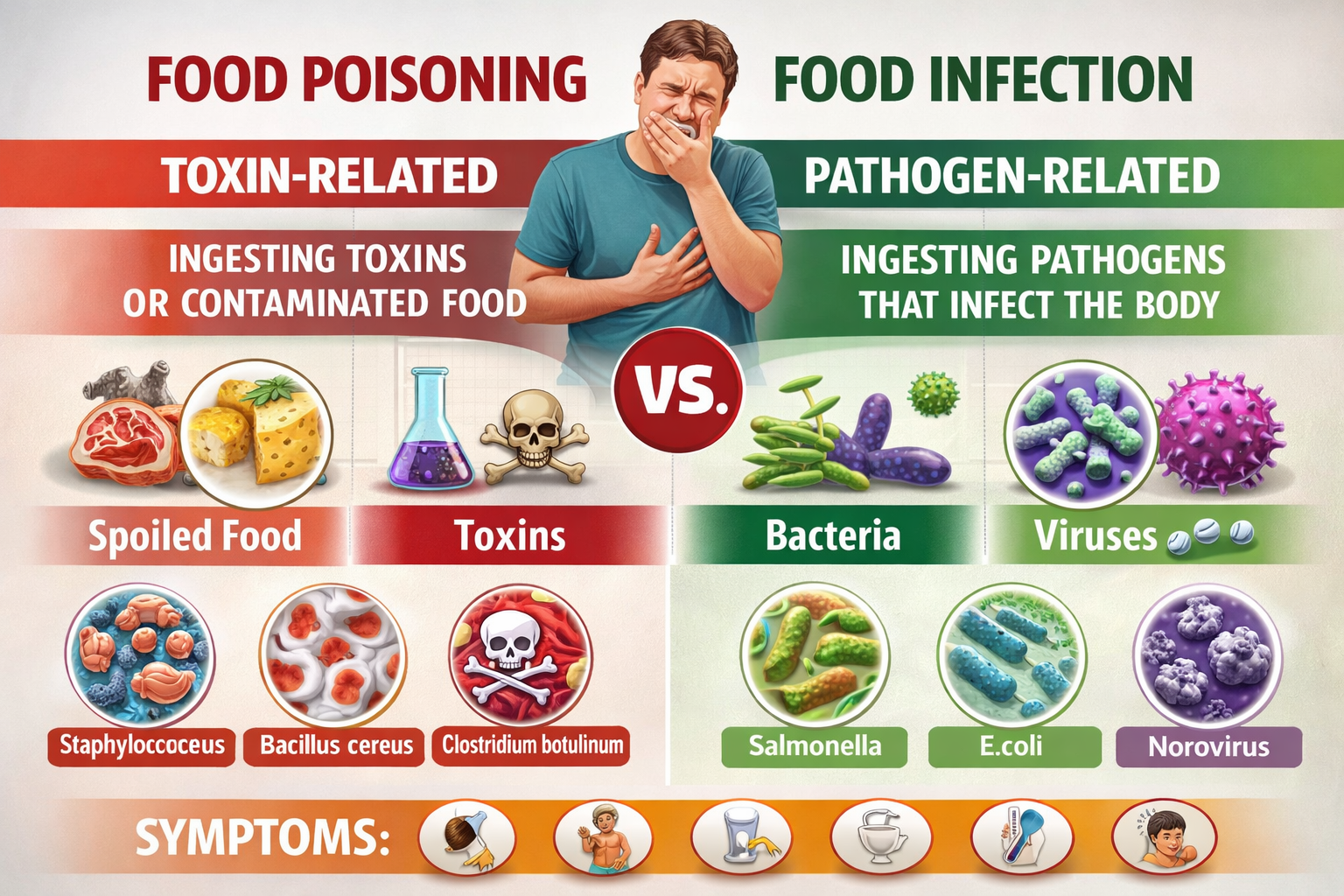
Differences between Food Poisoning & Food Infection
Foodborne illnesses are a major public health concern worldwide, affecting millions of people each year. Among the most commonly misunderstood terms in this domain are food poisoning and food infection. While these terms are often used interchangeably, they represent two distinct mechanisms through which contaminated food can cause illness. Understanding their differences is crucial for food safety professionals, food handlers, and consumers alike.
This article provides a comprehensive comparison between food poisoning and food infection, including their causes, symptoms, incubation periods, examples, and preventive measures.
Basic Definition
- Food poisoning occurs when a person consumes food containing pre-formed toxins produced by microorganisms. The harmful substance is already present in the food before consumption. In this case, the harmful substances are already present in the food before it is eaten. These toxins are typically produced by bacteria during improper food handling, storage, or processing conditions. Even if the bacteria are no longer alive, their toxins can still cause illness.
- Key Characteristics of Food Poisoning
- Caused by toxins already present in food
- Microorganisms may or may not be alive
- Rapid onset of symptoms
- Often linked to improper storage or temperature abuse
- Key Characteristics of Food Poisoning
- Food infection, on the other hand, happens when live pathogenic microorganisms are ingested and then multiply inside the human body. The illness develops after microbial growth in the host.
- Key Characteristics of Food Infection
- Caused by live microorganisms
- Pathogens multiply inside the host
- Longer incubation period
- Often associated with poor hygiene and cross-contamination
- Key Characteristics of Food Infection
Cause of Illness
- In food poisoning, the illness is caused by toxins, not the microorganisms themselves. Even if the microbes are dead, the toxin can still cause disease.
- In food infection, the illness is caused by active microorganisms that invade, colonize, and damage body tissues after ingestion.
Presence of Microorganisms
- Food poisoning may occur without live microorganisms in the food, as toxins can remain active after cooking.
- Food infection always requires the presence of live pathogens, as they must survive digestion and multiply in the intestines to cause illness.
Incubation Period
- Food poisoning generally has a short incubation period, often ranging from 30 minutes to 6 hours. Symptoms appear rapidly after eating contaminated food.
- Food infection usually has a longer incubation period, ranging from 12 hours to several days, depending on the pathogen involved.
Severity & Onset of Symptoms
- Symptoms of food poisoning appear suddenly and intensely, often causing abrupt discomfort.
- In food infection, symptoms develop gradually, as pathogens require time to multiply and trigger the body’s immune response.
Common Symptoms
- Food poisoning commonly leads to nausea, vomiting, abdominal cramps, and diarrhea, often without fever.
- Food infection may include diarrhea, fever, abdominal pain, weakness, and dehydration, as the body reacts to microbial invasion.
Role of Toxins
- Toxins play a central role in food poisoning, directly affecting the gastrointestinal system or nervous system.
- In food infection, toxins may be produced inside the body, but the primary cause is microbial growth rather than pre-formed toxins.
Effect of Cooking
- Cooking may kill microorganisms but often does not destroy heat-stable toxins, so food poisoning can still occur.
- Proper cooking is usually effective in preventing food infection, as it kills live pathogenic microorganisms beforeconsumption.
Dose Required to Cause illness
- Food poisoning can occur even with small amounts of toxin, as toxins are highly potent.
- Food infection generally requires a higher dose of live microorganisms, sufficient to survive stomach acid and establish infection.
Contagious Nature
- Food poisoning is not contagious, as toxins do not spread from person to person.
- Food infection can sometimes be contagious, especially when pathogens are shed through feces and transmitted via poor hygiene.
Duration of illness
- Food poisoning is usually short-lived, resolving within 24– 48 hours in most cases.
- Food infection often lasts longer, sometimes several days to weeks, depending on the pathogen and host immunity.
Immune System Involvement
- Food poisoning causes limited immune system activation as toxins act directly on tissues
- Food infection strongly engages the immune system, leading to inflammation, fever, and immune-mediated symptoms.
Diagnostic Approach
- Diagnosis of food poisoning focuses on clinical symptoms and food history, as detecting toxins can be difficult.
- Food infection is diagnosed through stool tests, cultures, or molecular methods to identify the causative microorganism.
Treatment Strategy
- Treatment of food poisoning is mainly supportive, involving hydration and symptom management. Antibiotics are usually not required.
- Food infection may require antibiotics or antiparasitic drugs, depending on the causative organism and severity.
Risk Groups
- Food poisoning affects all age groups equally, though children and elderly may experience more severe symptoms.
- Food infection poses a higher risk to infants, elderly, pregnant women, and immunocompromised individuals.
Public Health Significance
- Food poisoning often results in sudden outbreaks linked to a specific food source or event.
- Food infection contributes to long-term public health burdens, especially in areas with poor sanitation and unsafe food handling practices.
Examples of Causative Agents
- Common food poisoning agents include toxin-producing bacteria such as those that contaminate improperly stored foods.
- Food infection is commonly caused by bacteria, viruses, or parasites that grow inside the gastrointestinal tract.
Preventive Measures
- Preventing food poisoning focuses on proper food storage, temperature control, and hygiene to prevent toxin formation.
- Preventing food infection emphasizes thorough cooking, clean water, sanitation, and personal hygiene.
Real-World Examples
- Example of Food Poisoning- A classic example is eating improperly stored cooked food, such as rice or meat, that contains toxins produced by Bacillus cereus. Even reheating may not destroy the toxins, leading to rapid vomiting within hours.
- Example of Food Infection- Consuming undercooked poultry contaminated with Salmonella can lead to infection. The bacteria multiply in the intestines, causing symptoms like diarrhea and fever after 1–3 days.
Role in Food Industry Compliance
In standards like BRCGS, ISO 22000, and FSSAI guidelines, understanding hazards is fundamental.
- Food poisoning hazards are classified under chemical hazards (toxins)
- Food infection hazards fall under biological hazards (pathogens)
This classification helps in:
- Risk assessment
- Control measure identification
- Verification and validation processes
Conclusion
While food poisoning and food infection are both types of foodborne illnesses, they differ significantly in their causes, mechanisms, and prevention strategies. Food poisoning results from consuming toxins already present in food, leading to rapid symptoms, whereas food infection occurs when live pathogens enter the body and multiply, causing delayed but potentially more prolonged illness.
For food businesses, regulators, and consumers, understanding these differences is essential for improving food safety practices, reducing risks, and ensuring public health protection. By adopting proper hygiene, temperature control, and safe food handling practices, both food poisoning and food infection can be effectively prevented.